Alle Inserate von timo
Aktiv seit 23.05.2020
27 Inserate
Sortieren nach
Neueste



Zürich, 8005, 17.09.2026
Stunning vintage Omnibuses New York mirror, John Stephenson,
Stunning vintage Omnibuses New York mirror, John Stephenson, transport vehicle advertising, American collectable.
Beautiful vintage advertising mirror detailing the manufacture of omnibuses further detail below.
It was created in Victorian calligraphy with fonts, tones, and intricate borders. Underneath is a beautifully detailed picture of a Victorian omnibus.
Vintage mirror with a new black wooden frame and backing, excellent vintage condition with minimal signs of authentic patina.
Height: 43cm
Length: 33cm
Width: 2cm
AN AMERICAN COACHBUILDER, John G. Stephenson (1809 in County Armagh, Ireland - 1893 in New Rochelle, N.Y.), invented and patented the first streetcar to run on rails in the United States. Stephenson also designed the New York and Harlem Railroad, formally opening on 26 November 1832. Twelve days later, a horse-drawn streetcar was built at Stephenson?s works and named John Mason after the railroad company president started the public service. Stephenson is therefore remembered as the creator of the tramway.
The John Stephenson Car Company began in May of 1831 when John Stephenson opened a shop at 667 Broadway in New York City to build carriages. Twenty-two-year-old Stephenson had favourably impressed Abram [Abraham] Bower?the owner of an intra-city stagecoach line?who encouraged him to open his shop.
Brower had established the first-ever municipal public transportation system in 1827 when he began operating a regular horse-drawn vehicle up and down Broadway from Wall Street to Bleecker, offering transportation at a fixed fare of one shilling. Brower?s first vehicle was somewhat like a stagecoach but had four rows of seats facing forward, and the entrance to each row was from the side. He called this vehicle Accommodation. A year later, he introduced an improved vehicle, again somewhat like a stagecoach, but with two facing rows of seats and an entrance at the rear. He called this one, naturally, Sociable.
In 1831, Brower commissioned Stephenson to produce a much longer, boxier coach, similar to a French one of which he had seen a drawing. This, too, had facing seats and an entrance at the rear. It was described as ?four and a half feet in width, had elevated or elliptical springs, and swelled very slightly at the sides . . . the word ?Omnibus? was painted on both sides. Brower?s ?invention? was such a success that by 1835 more than a hundred omnibuses were running on the streets of New York. Naturally, Stephenson became the preeminent builder.
89.-

Zürich, 8005, 17.09.2026
10x 1903-1978 Cie Suisse des Wagons Cognac/Weinglas
10x 1903-1978 Cie Suisse des Wagons Restaurant Cognac/Weinglas
99.-

Zürich, 8005, 17.09.2026
12x 1903-1978 Cue Suisse dea Wagons Restaurants Shotglas
12x 1903-1978 Cue Suisse dea Wagons Restaurants Shotglas
99.-





Zürich, 8005, 17.09.2026
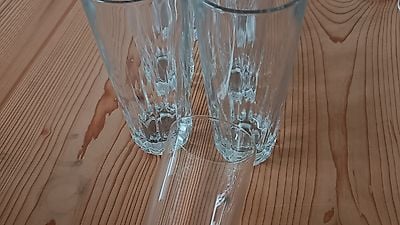
Messingformen / Backformen Ananas/ lilie / Stier
Messingformen / Backformen Ananas/ lilie
49.-


Zürich, 8005, 17.09.2026
Vintage Abstract Horse Cavas Painting signed by B. Simon.
Vintage Abstract Horse Cavas Painting signed by B. Simon.
Vintage 1960s acrylic paint on wood frame. The painting measures about 25? X 19?
In the wood frame.
About the Artist: ?Boris Goncharov Simon, born 8 January 1913 in Malzéville, Lorraine and died in Saint-Cloud 14 April 1972 Was a painter, a writer and translator French .
His family is French by his father, Pol Simon, mathematics works manager at Nancy, passion for art and literature, Russian and his mother, Elisabeth Goncharov (writer Ivan Goncharov was his great-uncle) . Because of the First World War , the Russian Revolution and its aftermath, Boris and his brother Sacha eldest stayed with their grandmother Russian mother from 1914 to 1921. In khâgne, Nancy, Boris was linked to friendship with the writer Henri Thomas he knew the Poincaré Nancy high school and both have maintained a long correspondence until 1943. Boris Goncharov Simon was the author of novels for young scouts.
His best known work is a testimony to the Emmaus Movement founded by Abbé Pierre . His story written since 1952, The Dressers Emmaus, published in 1954, upon its release was adapted to film and projected in 1955 .
Boris Simon is also known as a translator of German, particularly in the works of Thomas Bernhard . The other three brothers Boris also had literary or artistic activities. The eldest, Sacha Simon (1908-2011), was a reporter and writer. Louis, born in 1911, also author of novels Scouts, wrote popular songs, set to music by César Geoffray . The younger, Roman (1916-2007) was a very large animal illustrator for youth.?
199.-

Zürich, 8005, 17.09.2026
Schmidt Mensch ärgere dich nicht Mr 601 1003
Schmidt Mensch ärgere dich nicht Mr 601 1003
59.-

Zürich, 8005, 17.09.2026
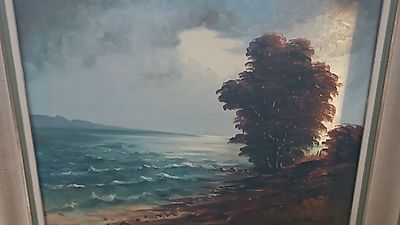
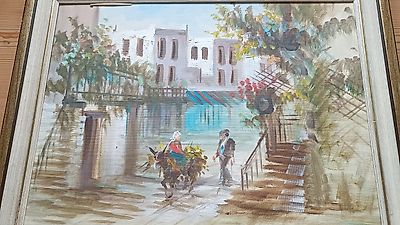
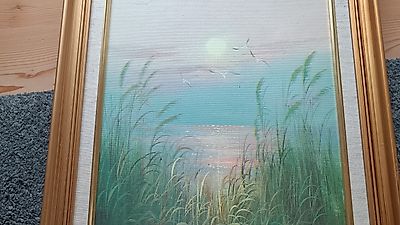
Em. Rochodient Gemälde Fluss Brücke mit Rahmen
Em. Rochodient Gemälde Fluss Brücke mit Rahmen
19.-



Zürich, 8005, 17.09.2026
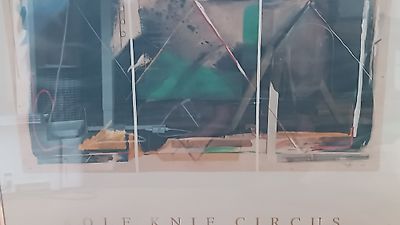
Regina Wachtmeister 1939 Katzenbild Druck
Katzenbild 1939. Druck im Rahmen
49.-
Zürich, 8005, 17.09.2026
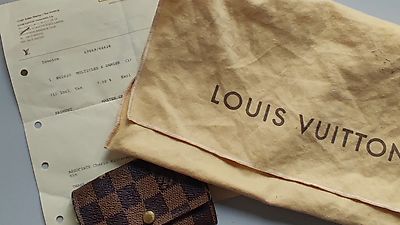
Louis Vuitton damier key ring 6 Schlüsseletui Vintage
verkaufe aus 2006 6Ring Louis Vuitton Schlüsseletui
plus rechnung und tasche
8005 HB Zurich
79.-
Zürich, 8001, 07.09.2026
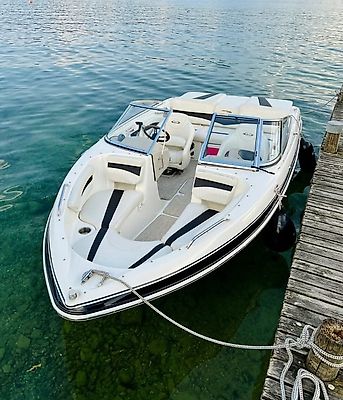
Motorbootmiete Glastron GT 185 - Dein Sportboot am Zürichsee
Motorboot "Pam" (Glastron GT 185) - Dein Sportboot am Zürichsee
Die perfekte Wahl für alle, die ein leistungsstarkes Sportboot mieten in Zürich möchten! Unsere "Pam" ist ein charismatischer Klassiker mit sportlicher Seele, der mit bis zu 65 km/h über das Wasser gleitet. Als bewährte Glastron GT 185 kombiniert sie zeitloses Design mit echter Power für deinen perfekten Tag auf dem See.
Egal, ob du actionreiches Wakeboarden auf dem Zürichsee planst oder die Goldküste entlang cruisen willst. Dieses Boot liefert die nötige Performance für ein unvergessliches Erlebnis.
Die Highlights auf einen Blick:
Kapazität: Viel Platz für bis zu 7 Personen.
Power: Kräftiger 135 PS Mercruiser ideal für Wassersport.
Einsatzgebiet: Perfekt zum Wakeboarden, Tube-Fahren oder Sonnenbaden.
Flexibilität: Zum Selberfahren (Schein Kat. A) oder mit Skipper buchbar.
2h Miete für CHF 390,-
4h Miete für CHF 540,-
8h Miete für CHF 750,-
Zzgl Benzin
Unsere Pam ist ideal für Wassersportarten wie Wakeboarden oder Tubing geeignet. Die grosszügige Liegefläche bietet ausreichend Platz zum Sonnenbaden. Ein Sonnendach spendet Schatten und mit unserem Erfrischungspaket lässt es sich auch an heissen Tagen auf dem Wasser so richtig geniessen. Das Boot bietet Platz für bis zu 7 Personen und ist somit perfekt für einen Tagesausflug mit Freunden oder Familie geeignet.
390.-

Zürich, 8001, 05.08.2026
Mitarbeiter:in Bootsvermietung / Skipper (m/w/d)
Stellenbeschreibung: Mitarbeiter:in Bootsvermietung / Skipper (m/w/d)
Für unsere Bootsvermietung am Zürichsee suchen wir eine zuverlässige und bootsaffine Persönlichkeit zur Unterstützung im operativen Tagesgeschäft.
Deine Aufgaben
Ein- und Auswassern von Motorbooten an verschiedenen Standorten am Zürichsee
(u. a. Wollishofen, Tiefenbrunnen, weitere Slipstellen)
Transport der Boote mit Trailer zu Wasser und zurück
Fachgerechte Übergabe der Boote an unsere Kund:innen
Erklärung der Boote, Sicherheitsinstruktionen und Einweisung in die Bedienung
Unterstützung der Kund:innen bei Fragen rund um Boot und Fahrt
Teilweise Einsätze als Skipper (Begleit- oder Überführungsfahrten)
Allgemeine Pflege und Kontrolle der Boote (Sichtkontrollen, Sauberkeit)
Dein Profil (zwingend)
Anhängerführerschein (zwingend erforderlich)
Erfahrung im Ein- und Auswassern von Booten
Sicherer Umgang mit Bootstrailern und Slipstellen
Praktische Erfahrung im Umgang mit Motorbooten
Zuverlässige, selbstständige und sorgfältige Arbeitsweise
Kundenfreundliches und sicheres Auftreten
Von Vorteil
Bootsführerschein (Schweiz oder anerkanntes ausländisches Patent)
Erfahrung als Skipper
Gute Ortskenntnisse am Zürichsee
Wir bieten
Abwechslungsreiche Tätigkeit direkt am Zürichsee
Arbeiten in einem kleinen, motivierten Team
Flexible Einsatzzeiten (saisonal / wetterabhängig)
Faire Entlöhnung entsprechend Erfahrung
-
Zürich, 8005, 23.07.2026
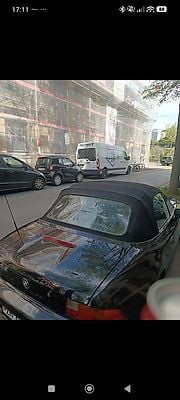
BMW Z3 Cabrio Scheckheft gepflegt 66000 KM
Verkaufe BMW Z3. BJ 1999. Scheckheft. Nur 66000 KM
Preis 9999 CHF
Sommerfahrzeug
Garagenwagen
Das Dach wurde neu leider aufgeschnitten und wasserdicht zugeklebt. Optisch störend wenn geschlossen. Dach aber dicht.
Offen fahren keine Beeinflussung
9'999.-